← All work
Platform Systems · 2024 - 2025

Shipping at Scale: Integrating an Acquisition and Owning a Critical Product Area at Deel

Senior Product Designer Series D Scale-up, HR Tech Designer/PM hybrid → View deel engage

I joined Deel during the acquisition of Zavvy, shipped the integration in three months, then owned the Goals system while operating across product and design with no dedicated PM in the squad.

3mo
To ship core Engage post-acquisition
0
Dedicated PMs - hybrid designer-product role throughout
Goals
System owned and scaled across a global platform
AI
Insights to decisons influenced roadmap post-departure

Integration without losing momentum.

Deel acquired Zavvy, a people development platform, and needed to integrate it into Deel's architecture and design system without losing delivery speed (Deel speed). Following integration I took ownership of the Goals system which is one of the most complex and horizontal data models in the product.

Connecting individual performance to team and organisational objectives across a global platform used by thousands of companies.

Operating as a hybrid designer-product partner.

No dedicated PM meant I was operating across product strategy, backlog prioritisation, sprint planning, ticket definition, QA and release coordination alongside the design work.

High velocity, high ambiguity, high stakes.
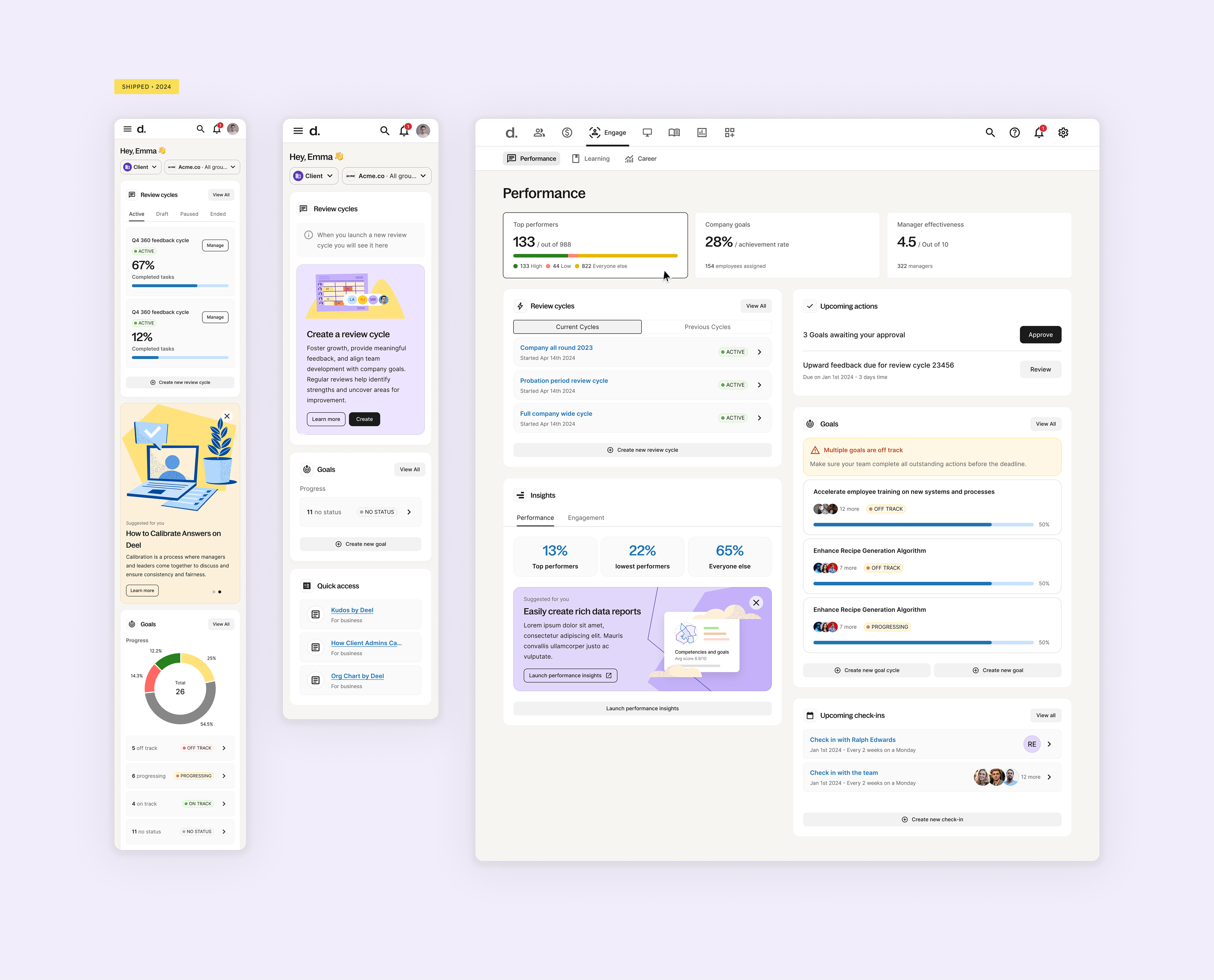
Two Platforms. One System. No PM.

When Deel acquired Zavvy, the challenge wasn't just visual translation, it was understanding two entirely different systems and customer mental models and deciding which ones to preserve.


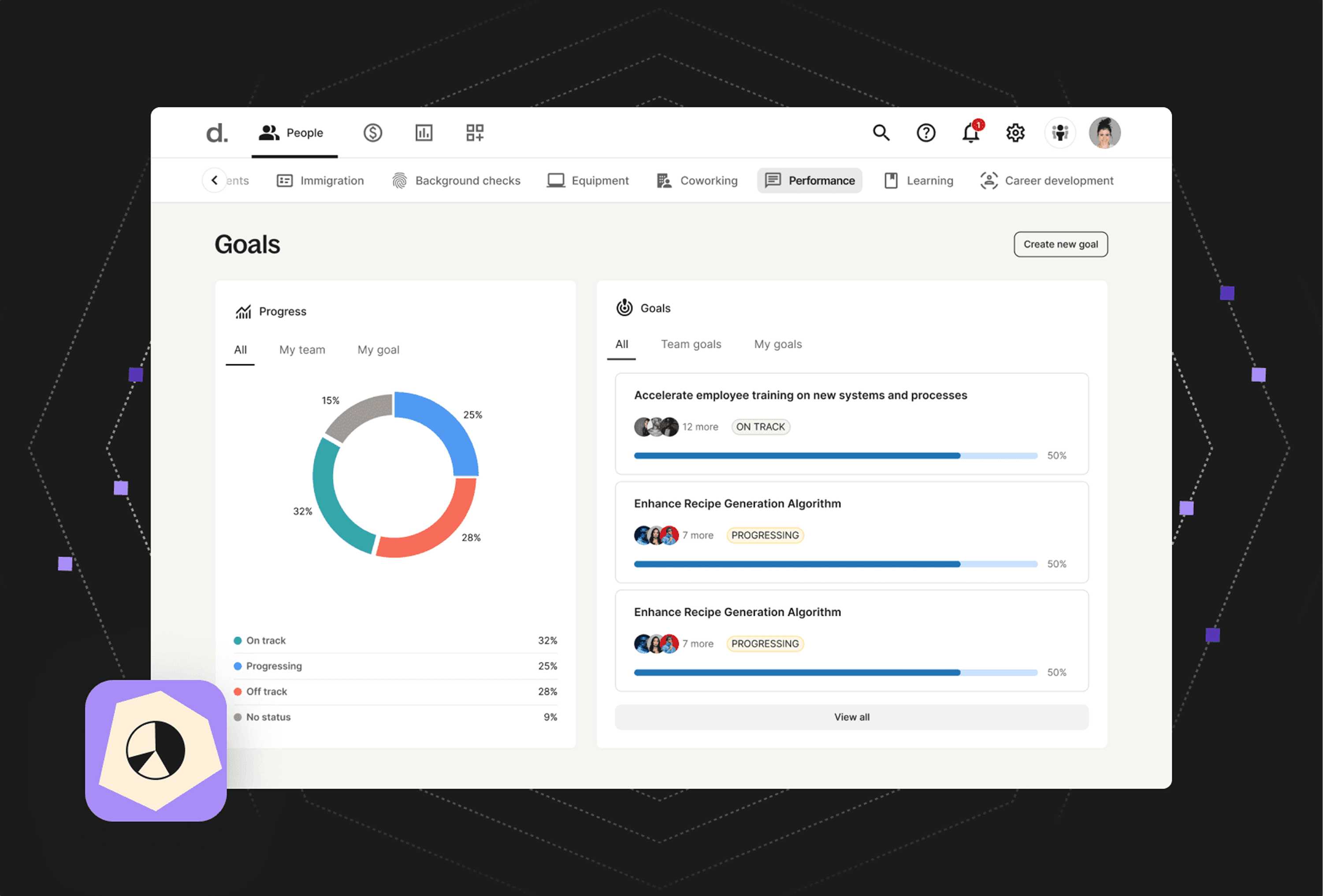
Deel engage performance hub

Phase 1 - Platform Integration

Translated Zavvy's interaction patterns into Deel's design system.

Worked closely with engineering and design system teams to ensure consistency across a rapidly evolving platform. The challenge was making decisions about where to preserve Zavvy's existing patterns and where to break them in favour of Deel's platform consistency.

Zavvy's mental models were different to Deel's. I understood both deeply enough to arbitrate those decisions and shipped core Engage on time without breaking existing platform consistency.

Phase 2 - Goals Ownership

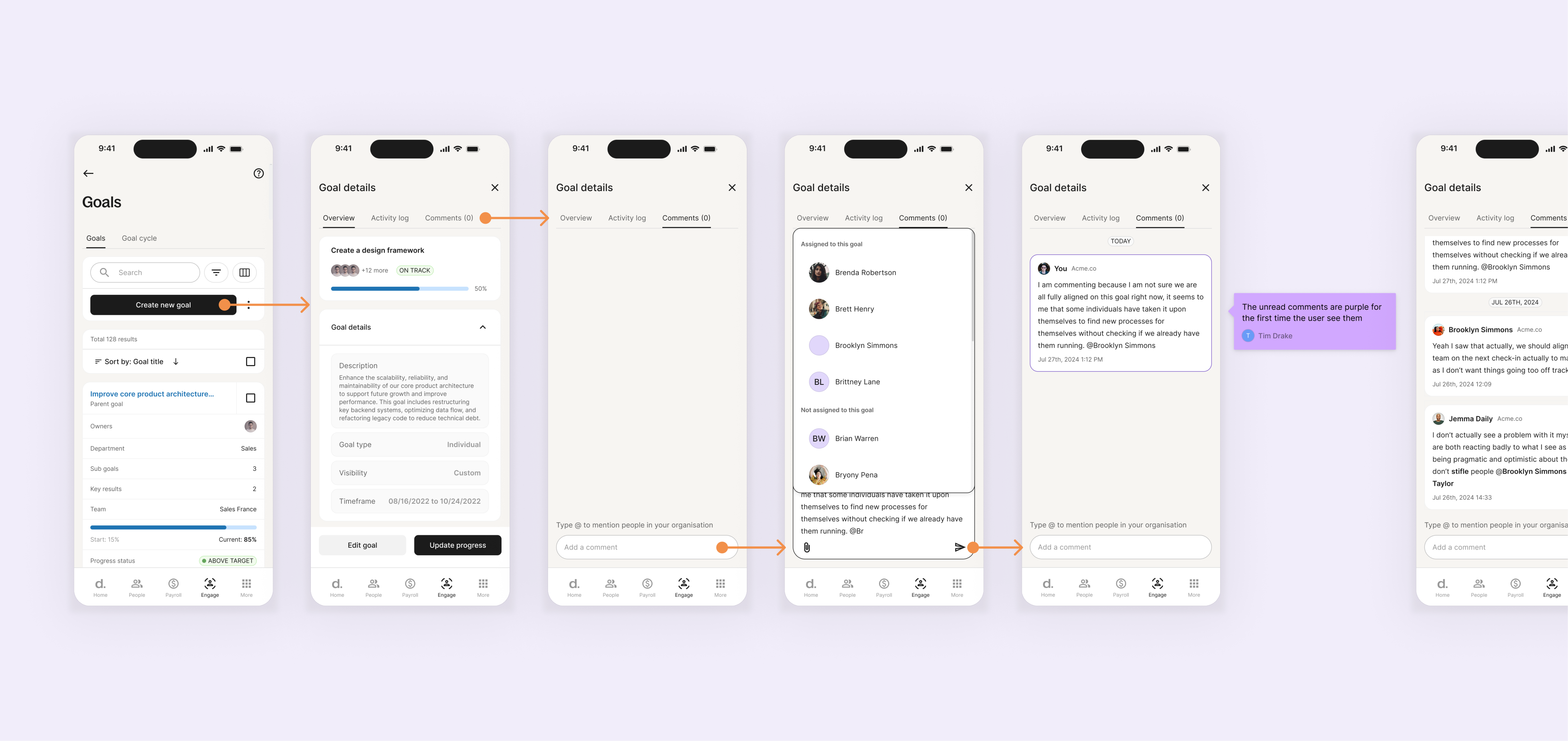
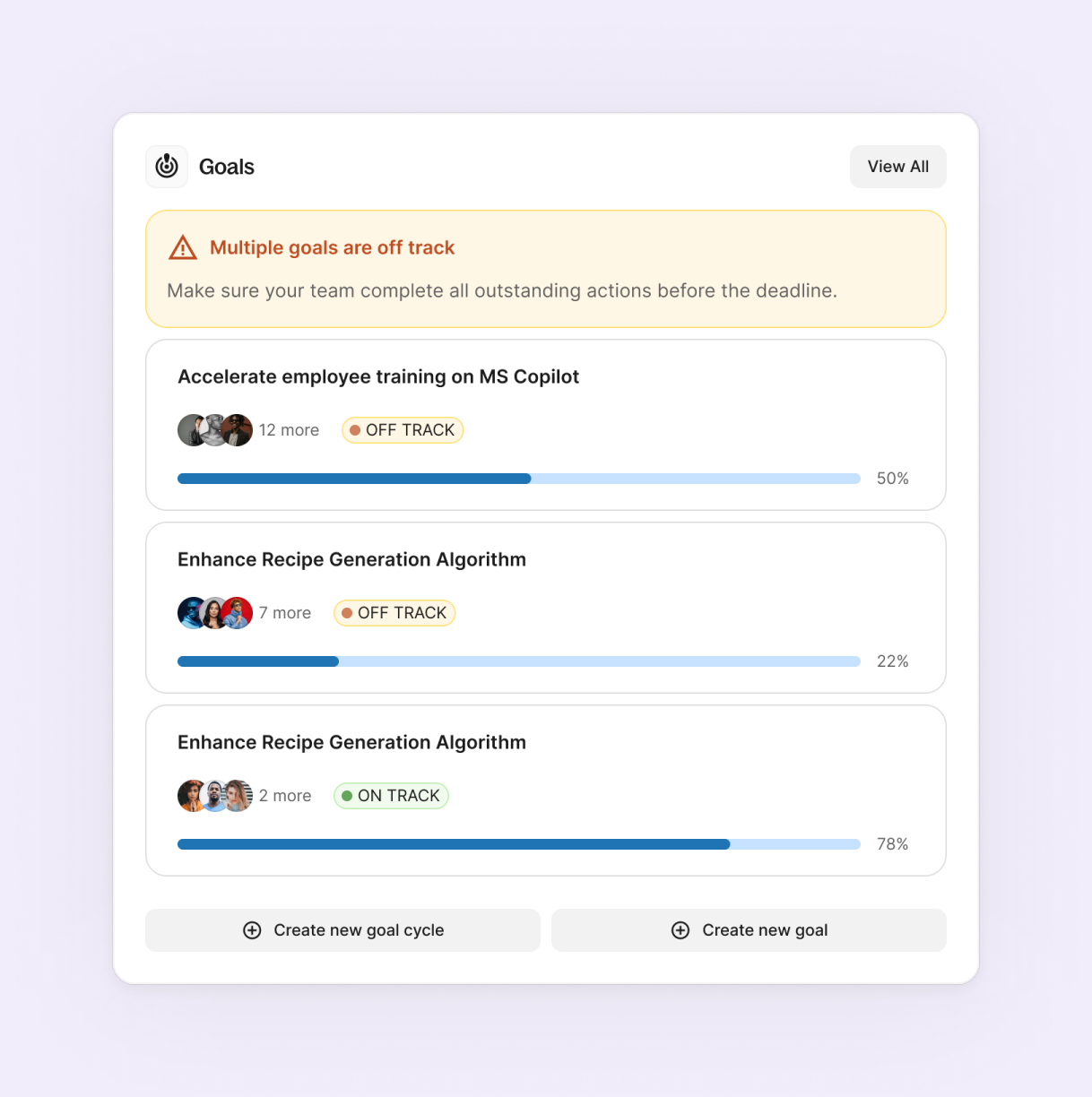
Designed workflows connecting individual goals to organisational objectives.

Structured complex data models across goals, reviews, Insights, Learning and check-ins. Reduced fragmentation between tools so goals were not isolated but connected to broader performance signals.

I also drove backlog organisation, sprint planning, ticket definition and release coordination across teams. I made prioritisation calls, aligned engineering around system behaviour, and kept delivery moving under constant organisational change.

Goal System

One of the most complex data models in the product.

Individual goals connecting to team, department and organisational objectives across a global platform used by thousands of companies. Every design decision had downstream consequences across performance reviews, check-ins, and manager dashboards.

Phase 3 - Insights and AI Exploration

What if connected performance data could evolve into something that actually told you what to do.

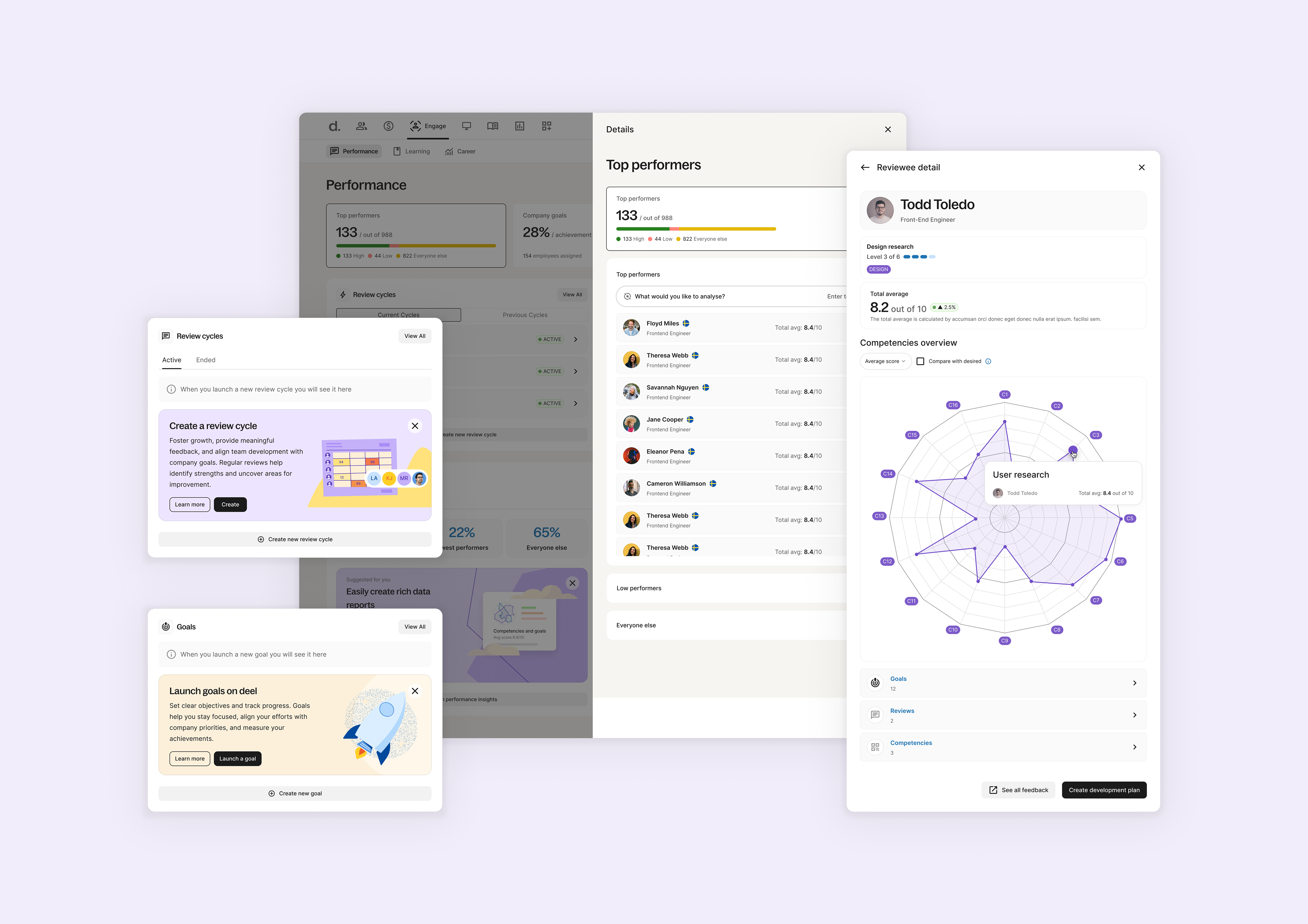
Worked closely with product leadership to explore how connected performance data could evolve into actionable insights. Designed the performance digest - a manager-facing summary of team performance signals, top performers, and emerging patterns.

Explored AI-powered development plan generation that could take an individual's performance data and generate a structured growth plan. This thinking later influenced development after I left and has since taken shape in similar tools and workflows.


Performance digest

Hypothesis & Results · AI Performance Digest

Hypothesis: A manager-facing AI digest of team performance signals would reduce time-to-insight and help managers act before problems escalated rather than after.

Post-departure
→ Prod
Reached roadmap

The environment was think deep and ship fast with rapid fix cycles. However, I work best when there is space for deeper discovery.

The research practice I built at Hackajob produced better long-term product decisions. I would push harder to create that space even within a fast-moving environment.

I also had ideas about where the product should go that I did not push hard enough on. I should have made that case more forcefully with data behind it.

The digest and intelligence layer pointed toward something more interesting than the direction the team took.

I took the digest and data stories thinking forward into subsequent work. At Matcheros I introduced AI assisted hiring workflows from the ground up - bringing the same instinct for intelligent automation into a zero-to-one context with a very different set of constraints.

Next case study

Matcheros: Africa-First, Zero to One →
← All work